5 hr
Bangkok Grand Palace, Wat Pho & Wat Arun Guided Tour
Small-group temple tour through Bangkok's Grand Palace, Wat Pho, and river-crossing to Wat Arun.
Reserve
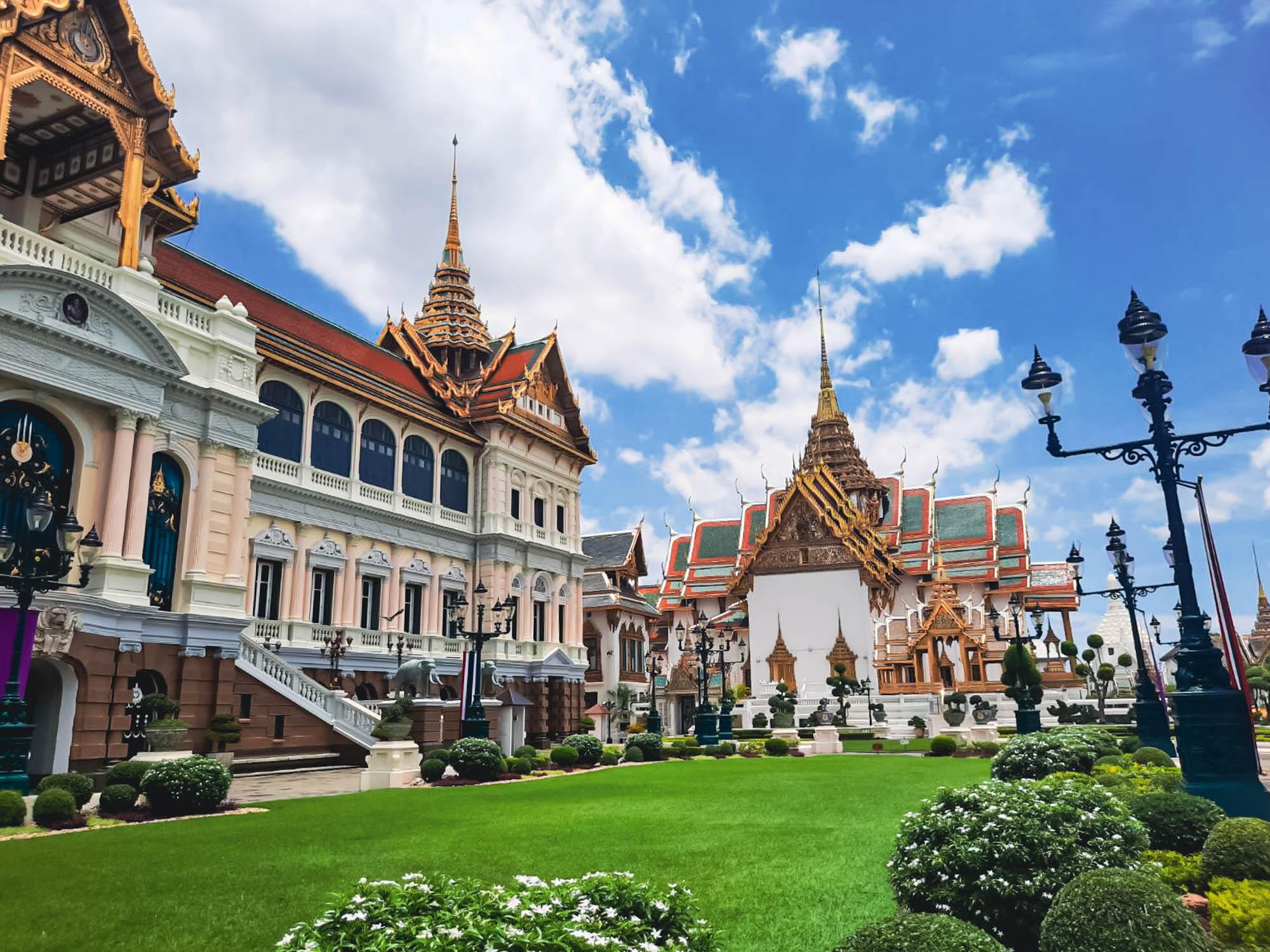
Gilded chedis at first light, quiet cloisters before the crowds.
Hand-picked by our editors — only the best 5 experiences from 140 reviewed.
Verified partners for every tour, free cancellation where available, and instant confirmation on every booking.
5 hr
Small-group temple tour through Bangkok's Grand Palace, Wat Pho, and river-crossing to Wat Arun.
Reserve
5 hr
River-boat tour to Bangkok's iconic temples and a bustling flower market with a local guide.
Reserve
3 hr
A guided half-day walk through Bangkok's Grand Palace and the Emerald Buddha temple.
ReservePrices from verified partners. Availability updates in real time at checkout. Free cancellation policies apply where shown.
The landmarks, rooms, and views travelers on this tour remember — all visible on a single visit.
Home to the sacred Emerald Buddha statue carved from a single block of jade. This is the most revered temple in Thailand.
This structure blends traditional Thai design with Victorian-era European architecture. It was built during the reign of King Rama V.
An impressive library building known for its elaborate glass mosaics and gold leaf ornamentation. It houses important Buddhist scriptures.
A raised pavilion featuring statues of past kings. It is typically opened only during specific royal memorial days.
A former royal residence showcasing neo-classical design principles. It stands out for its distinct western influence on the grounds.
The Grand Palace offers an unmatched look at royal ceremony and intricate murals, while Wat Arun stands out as the more physically immersive landmark for riverside photography. Most travelers find that securing a bangkok temple tour private for the palace provides the essential cultural context, while the riverside pagoda is better suited for a self-paced visit.
| Feature | Top pick Grand Palace | Wat Arun |
|---|---|---|
Primary Appeal |
Royal architecture and murals | |
Historical Significance |
Established 1782 for royalty | |
Time Requirement |
2–3 hours | |
Crowd Density |
High density daily | |
Attire Strictness |
Very strict enforcement | |
Entry Fee |
500 THB (summer) | |
| See tickets → |
Verdict: Opt for a bangkok temple tour private tour to navigate the palace's complex layout efficiently, or consider bangkok temple tour private tickets if you prefer a self-guided exploration of the smaller riverside site.
Choose your ticket, select your date, and reserve in under two minutes. Secure checkout handled by our verified partner.
Instant confirmation by email, with a mobile voucher you can save offline. No printing, no queuing at a collection desk.
Arrive at the entrance, show your voucher on your phone, and walk in. Most tickets include priority or skip-the-line access.
Best time to go, insider tips, nearby landmarks, and the cancellation fine print — flip through to skim what matters to you.
How crowds, weather, and events shift across the year.
August offers high temperatures and occasional rain showers. Morning visits are vital to beat the heat.
November to February provides cooler, drier weather. This is the peak season for a bangkok temple tour private.
March to May is very hot. Plan your bangkok temple tour private sessions for the earliest arrival window.
Small details that turn a good visit into a great one.
Wear clothes that cover shoulders and knees to avoid being turned away at the gate. This is strictly enforced for all guests.
Avoid road traffic by using the river boat or MRT. This makes reaching your bangkok temple tour private easier.
Carry a water bottle and drink frequently. The midday sun is intense in the open palace courtyards.
Follow all posted photography restrictions carefully. This ensures a smooth bangkok temple tour private experience.
Secure your spot for bangkok temple tour private tickets early. Tours often sell out during the peak season.
Non-bookable sights within a short walk — free to visit, easy to pair.
Home to the Reclining Buddha statue. It is located just south of the palace.
Famous riverside temple featuring a tall prang. Accessible via cross-river ferry.
Houses extensive artifacts from Thai history. Excellent for deepening historical context.
A quiet public park near the palace walls. Good for resting after your tour.
Flexible, no hidden fees.
Full refunds are available for private tours if canceled at least 24 hours before the scheduled start time. The 500 THB conservation fee is typically handled by your tour operator.
Hand-picked options within walking distance — pick a district for vibe, or a specific hotel for convenience.
Historic area with various boutique hotels. Close to all major landmarks.
High-end hotels with views of the Chao Phraya River. Convenient for private transport.
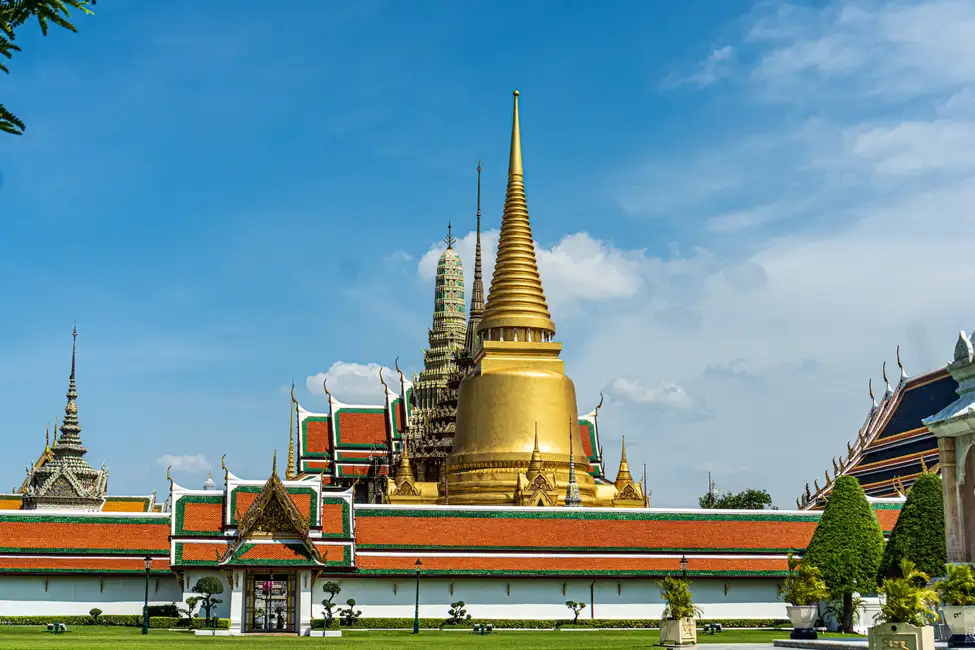
The Emerald Buddha is not emerald. The 66-centimetre figure enthroned inside Wat Phra Kaew is carved from a single block of green jadeite, and its three seasonal costumes — summer, rainy, winter — are still changed by the reigning monarch. That single detail explains the Grand Palace better than any floor plan. This is not a museum of a dead court. It is a working ceremonial address, and the crowds who queue at Na Phra Lan Road each morning are entering an active state precinct. Rama I laid the first walls in 1782, moving the capital across the Chao Phraya from Thonburi to a defensible bend on the eastern bank. The complex he raised covers 218,000 square metres, ringed by nearly two kilometres of crenellated white wall. Successive reigns added to it without erasing what came before, which is why the site reads as an argument between centuries. The Chakri Maha Prasat Hall, completed in 1882, carries an Italianate Renaissance body beneath three Thai spired roofs — a compromise ordered by Rama V after his advisers objected to a European dome. Nearby, the Dusit Maha Prasat stands in pure early-Rattanakosin form, its four-armed plan crowned by a seven-tiered spire. Wat Phra Kaew occupies the northeastern quarter, the royal chapel that has no resident monks. Its outer gallery runs 178 bays of continuous mural depicting the Ramakien, the Thai telling of the Ramayana, repainted repeatedly since the reign of Rama I. Gold mosaic chedis, mythological yaksha guardians nearly six metres tall, and Khmer-style prangs crowd a courtyard laid out for procession rather than contemplation. A well-run bangkok temple tour private walk is largely an exercise in reading these surfaces: which glass tile is 18th century, which is a 1982 bicentennial restoration. Why it still matters is partly civic. The Queen Sirikit Museum of Textiles, included in the 500 THB conservation fee, preserves court dress as material evidence of a monarchy that dressed deliberately. The precinct also anchors the Rattanakosin island alongside Wat Pho and, across the river, Wat Arun — the three sites most Bangkok landmarks itineraries thread together. Private bangkok temple tour private tickets exist because the iconography here is dense enough to be illegible without a guide, and because the 500 THB admission grants entry to a complex that rewards slow, informed looking rather than a photograph and a exit.
"This is not a museum of a dead court, but a working ceremonial address."
The Grand Palace has flat, paved areas, though some sections have steps. Your guide can assist with the best route.
Yes, shoulders and knees must be covered for all guests. The staff at the Grand Palace strictly enforce these rules for entry.
Photography is allowed outdoors but prohibited inside temples. Follow your guide's instructions during your bangkok temple tour private.
Food and drink are not permitted inside the complex. Please finish refreshments before your bangkok temple tour private begins.
Cancellations 24 hours in advance are usually eligible for a refund. Contact your provider directly to manage your bangkok temple tour private booking.